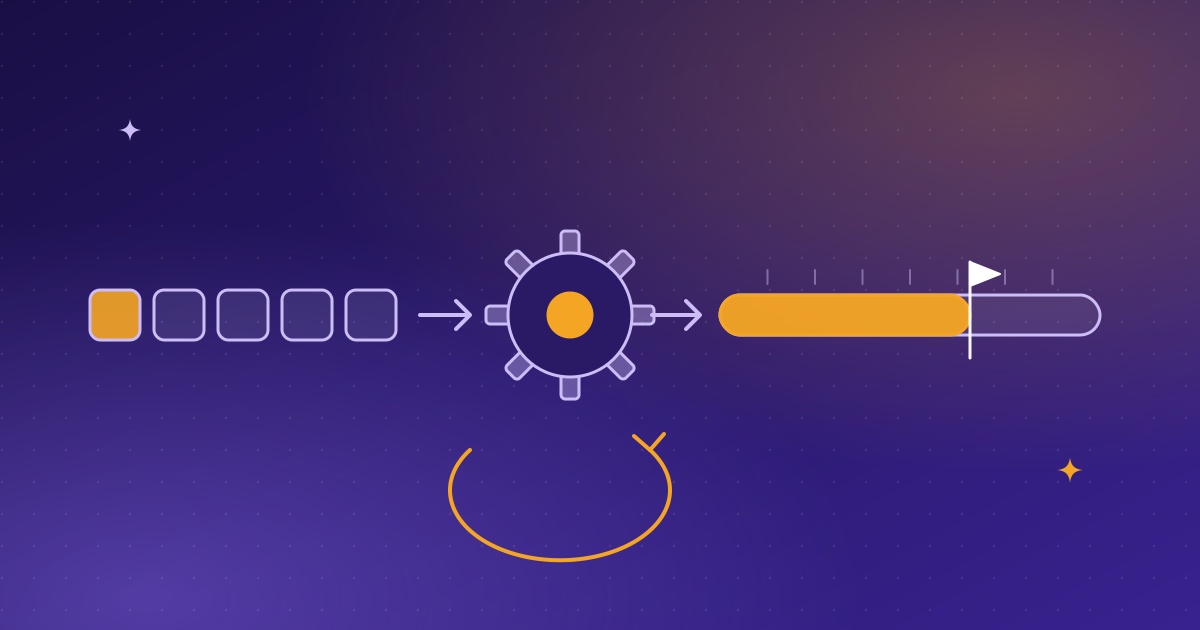
One AI assistant that does everything tends to do everything a little badly. What worked better for me was to build a small team of agents, each with one job, and let them work in parallel. On a real project, this raised my productivity by 400%.
The idea: a vertical structure
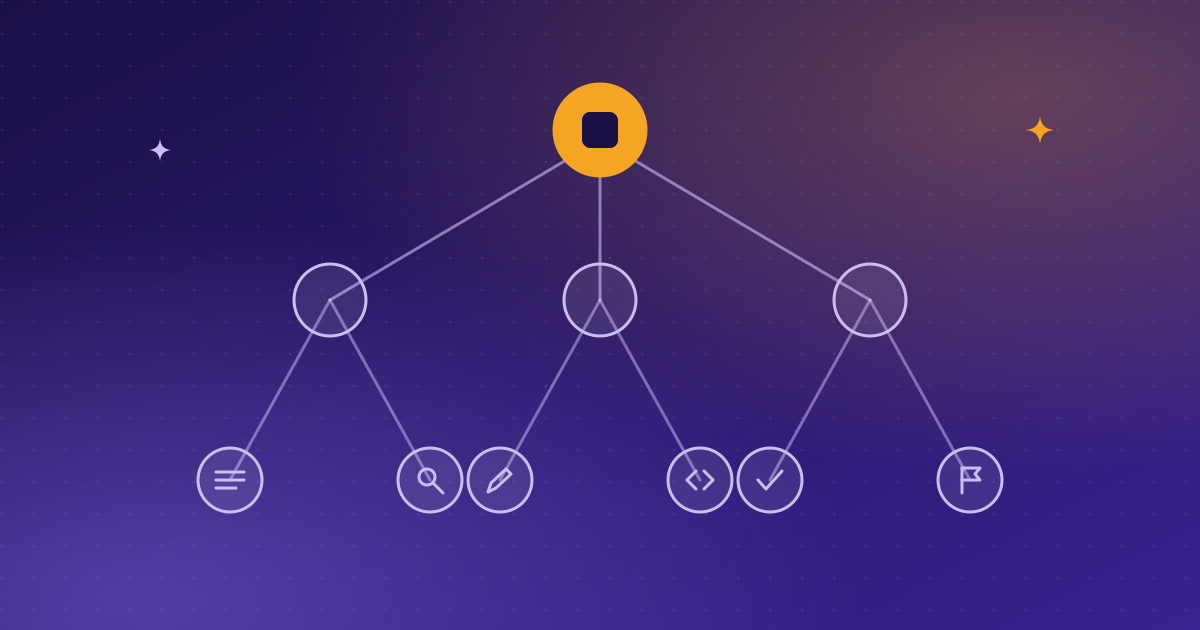
I split the work of shipping a feature into the same stages a human team would use, and gave each stage to its own subagent:
- Planning: turns a request into clear tasks and acceptance criteria.
- Research: reads the existing code and docs, and finds what the change will touch.
- Design: proposes the approach before anything is written.
- Development: writes the code for one task.
- Testing: writes and runs tests for that code.
- Review: reads the result like a strict colleague and sends it back if it falls short.
Each agent receives only what it needs and returns a clear result, which becomes the input of the next one.
The manager: a CTO agent
I don’t brief six agents one by one. I talk to one: a CTO agent that manages all the others. It is the only agent that speaks to me, and the only one that sees the whole picture.
- It receives my request in plain language and breaks it into tasks.
- It assigns each task to the right specialist and decides what can run in parallel.
- It checks every result against the goal of the feature, not only against the task it was given, and sends work back when it falls short.
- It escalates decisions to me. When a choice changes the product, the architecture or the cost, it stops and asks instead of guessing.
I use this setup on Summit, a mobile goal app: one request goes to the CTO, and the specialists plan, build, test and review behind it. The benefit is simple. I get one accountable point of contact and one summary at the end, instead of the output of six agents to read.
The multiplier: running agents in parallel
The vertical chain handles one task well. The real gain came from running several chains at the same time on separate tasks. While one agent tests a feature, another already plans the next. I spend my time deciding and reviewing instead of waiting.
Why I don’t use Superpowers
Superpowers is a popular, well-made set of skills that gives a coding agent a fixed process: brainstorm, write a plan, then work test-first. I tried that kind of approach, and I chose to build my own workflow instead. My reasons:
- It is generic by design. A framework made for every project cannot know my project. My agents carry the conventions of the codebase, the way I want mobile screens structured and the checks I always run, so they start with context instead of rediscovering it.
- The process is the same for every task. Renaming a button and designing a payment flow do not need the same ceremony. With my own setup, the CTO decides how much process a task deserves.
- It costs time and tokens on small work. Long planning and review rounds on a one-line change slow me down more than they protect me.
- I want to own every rule. When an agent does something I don’t like, I can open its instructions and change them. I would rather maintain a small system I understand than adjust one I don’t control.
This is a preference, not a verdict. For someone starting out with agents, a ready-made framework is a good way to learn what a structured workflow looks like. I moved to my own because I now know exactly what I need from it.
What keeps it reliable
- Small, specific instructions. An agent with one narrow job is easier to guide and to check.
- A review step that can say no. Without it, speed just produces more bugs.
- Clear hand-offs. Each agent states what it did, what it assumed and what is left.
- A human in charge. The CTO agent manages the team, and I manage the CTO. I own the decisions, the architecture and the final review.
Where it fits
This setup suits teams with a steady flow of well-defined tasks: features, refactors, test coverage, documentation. It is less useful for vague, exploratory work, where the hard part is knowing what to build.
If you want a workflow like this for your own team, or an agent system built around your data and daily tasks, I can set it up with you.

Written by Michele
Custom apps & AI developer · Lausanne, Switzerland